

 Image 1 of 3
 Image 2 of 3
 Image 3 of 3
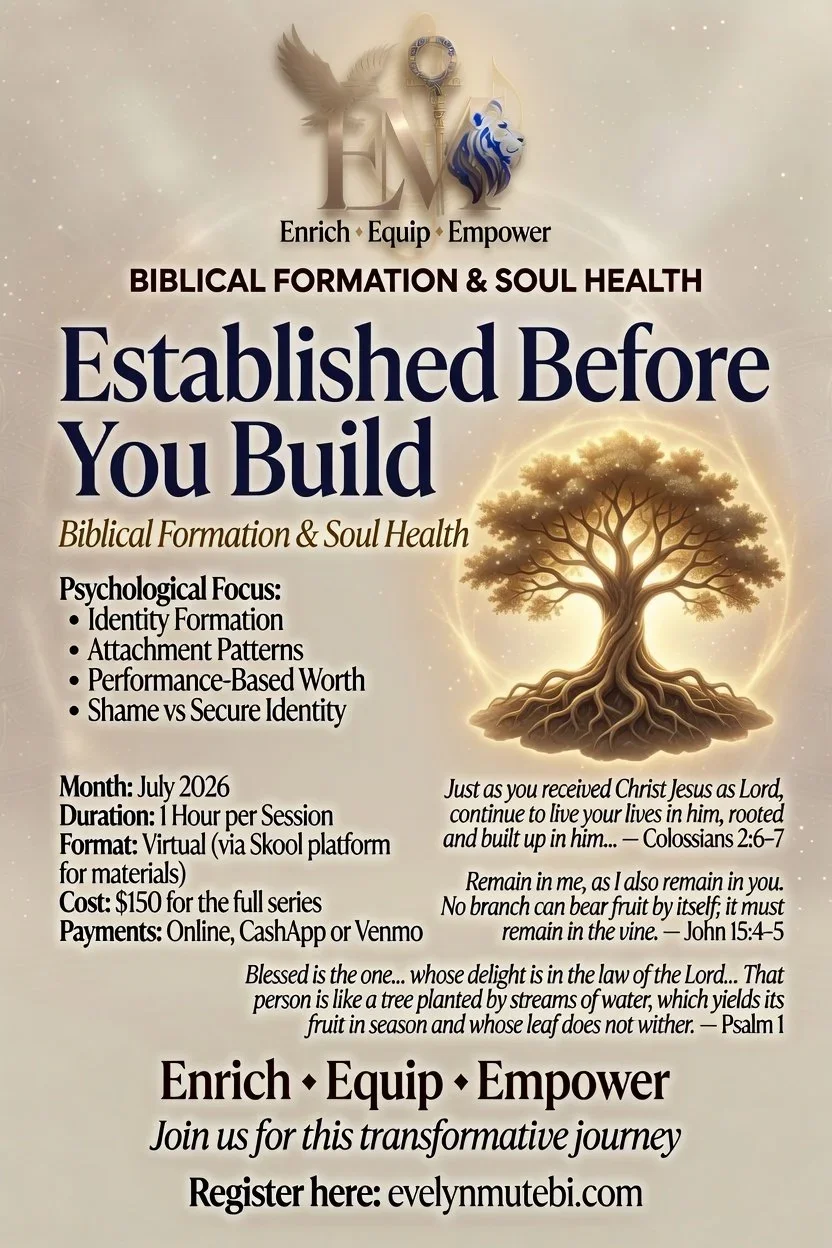
Mondays: 12:00 -1:00 pm Dates: July 2026
Biblical Formation: Scriptures: Colossians 2:6–7, John 15:4–5, Psalm 1
Biblical Formation: Start with key Scriptures on identity in Christ (e.g., Ephesians 1:3-14 – chosen, adopted, redeemed; Galatians 2:20 – Contrast orphan mindset (scarcity, self-reliance, fear of abandonment – e.g., prodigal son in Luke 15 before returning) with son/daughter identity (abundance, inheritance, intimacy with the Father – e.g., "Abba, Father" in Romans 8:15).
Psychological Maturity: Explain identity formation. Psychological Maturity: Link to shame vs. secure identity: Orphan mindset stems from unresolved attachment wounds, leading to performance-based worth (e.g., "I must earn love").Identity formation, Attachment patterns, Performance-based worth, Shame vs secure identity
Attachment patterns Link to performance-based worth. Contrast with secure identity: Rooted in inherent worth, fostering soul health and emotional regulation.
Boundaries against over-functioning: Leaders who overextend to prove worth burn out; instead, model Jesus' rest and delegation (e.g., Mark 6:31).
Orphan Mindset vs. Son/Daughter Identity
Reflection: Leadership: "What boundaries have you set (or need to) against overfunctioning when roots feel shaky?"
Biblical: Jesus' secure identity (e.g., baptism affirmation in Matthew 3:17) enabled boundary-setting amid criticism.
Psychological: Approval addiction as a performance trap; secure identity frees leaders to prioritize soul health.
Mondays: 12:00 -1:00 pm Dates: July 2026
Biblical Formation: Scriptures: Colossians 2:6–7, John 15:4–5, Psalm 1
Biblical Formation: Start with key Scriptures on identity in Christ (e.g., Ephesians 1:3-14 – chosen, adopted, redeemed; Galatians 2:20 – Contrast orphan mindset (scarcity, self-reliance, fear of abandonment – e.g., prodigal son in Luke 15 before returning) with son/daughter identity (abundance, inheritance, intimacy with the Father – e.g., "Abba, Father" in Romans 8:15).
Psychological Maturity: Explain identity formation. Psychological Maturity: Link to shame vs. secure identity: Orphan mindset stems from unresolved attachment wounds, leading to performance-based worth (e.g., "I must earn love").Identity formation, Attachment patterns, Performance-based worth, Shame vs secure identity
Attachment patterns Link to performance-based worth. Contrast with secure identity: Rooted in inherent worth, fostering soul health and emotional regulation.
Boundaries against over-functioning: Leaders who overextend to prove worth burn out; instead, model Jesus' rest and delegation (e.g., Mark 6:31).
Orphan Mindset vs. Son/Daughter Identity
Reflection: Leadership: "What boundaries have you set (or need to) against overfunctioning when roots feel shaky?"
Biblical: Jesus' secure identity (e.g., baptism affirmation in Matthew 3:17) enabled boundary-setting amid criticism.
Psychological: Approval addiction as a performance trap; secure identity frees leaders to prioritize soul health.